

Start with the actual enquiry
Establish which order or issue the customer means using the supported source. Check the fulfilment or delivery evidence, its freshness and the relevant policy. A tracking event and a customer’s report can disagree; surface the discrepancy instead of presenting a guess as a fact. A useful request is: “Explain the current status of this enquiry using the connected evidence. Draft a response under our shipping policy and flag what still needs checking.”Policy is part of the answer
Returns, refunds, delivery promises and escalation rules should come from the brand’s policy. Do not invent a universal refund threshold or offer a promise that the connected evidence cannot support. Before approving a reply, check the recipient, the facts, the tone and any commitment. Preparing a response does not mean the customer has received it.Data and available operations
Use the authorised enquiry and order flow where available. Avoid copying complete customer records into broad company notes or unrelated conversations. Customer-data permissions can be separate from catalogue access. Available helpdesk operations, order evidence and sending capabilities depend on the connected systems and account enablement. Check which reply, refund and carrier operations are available to your company. Check the actual Action and receipt for completed work.Work through an enquiry
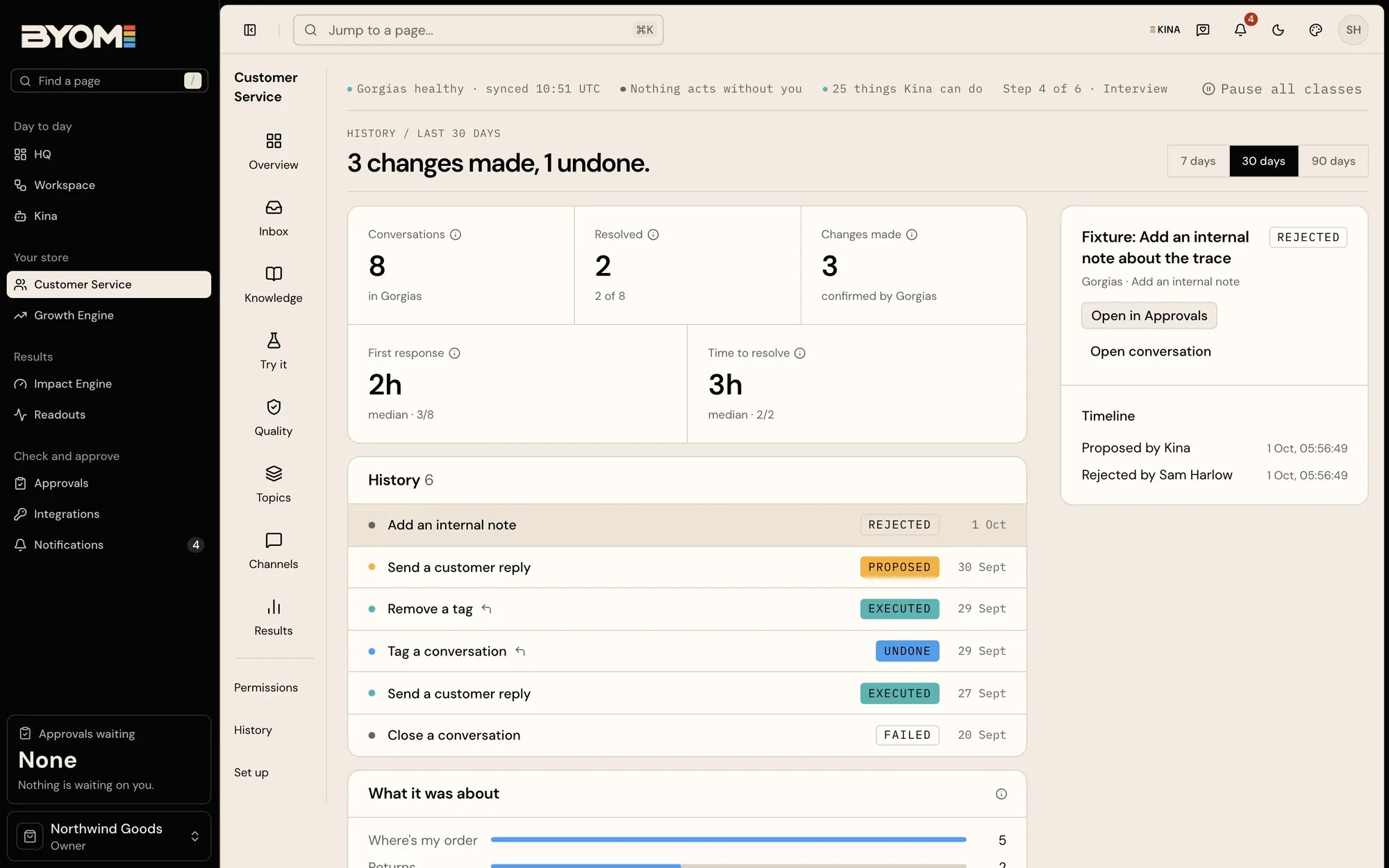
Illustrative demo Customer Service history. The displayed entries explain recorded service work; they are not live customer conversations or delivery outcomes.
Use the surrounding sections for the right job
Check the available operation and its decision state before sending or making another provider change.